seo-cro-pluralistic-thinking-awe-consulting-

The Pluralistic Thinking AWE Concept

Interesting how Agile principles extend well beyond software.

This idea of avoiding siloed thinking and aligning different perspectives is exactly what we’re now seeing in areas like search and conversion strategy.

I explored this a bit more here if anyone’s interested: https://awe.cauchisavona.com/seo-cro-pluralistic-thinking/

Agile-King-and-chess-agileMalta

Agile, Chess, and “Il-King”

Agile, Chess, and “Il-King”

Is your team just playing the game or winning it?
Someone recently told me: “Agile isn’t for strategy; strategy is like Chess.”
Actually, Chess is exactly how Agile should flow.
In Chess, the goal is the King.
In Agile, the goal is Value.
Every move serves that purpose.
The Sprint: Your next move on the board.
The Spike: Research or “luring out the opponent” to reduce uncertainty.
The Feedback: Your opponent’s counter-move that forces you to adapt.
Knowing the rules of Chess doesn’t make you a Grandmaster. Likewise, memorizing the Scrum Guide doesn’t make you Agile.
The Maltese Twist: “Aw King!
In Malta, we use “King” for everything.
But in business, many organizations play “Cargo Cult Agile.
They copy ceremonies, use the buzzwords, and act very busy, but they aren’t actually playing to win.
They’re just moving pieces without a strategy.
We see Agile mastery not about memorizing patterns; it’s about adaptation.
It’s seeing the board clearly, responding to the unexpected, and never losing sight of the “King” (the goal).
Who is the “Elvis” of Agile?
Malta has its traditional kings, and the music world had Elvis.
If Agile had its own Elvis, someone who showed true mastery rather than just following the “rules”, what behaviors would make you say: “Ehh, dak veru King!”?
What does “Agile Mastery” look like to you in a Maltese workplace?

Tell us in the comments!


Readmore in our LinkedIn Group: https://www.linkedin.com/groups/2002329/

Follow AgileMalta on Facebook or LinkedIn
Two-unified-roles-AgileMalta

Fixing parts isn’t enough.

PO & SM: Two Roles, One Unified Goal

In many teams, the Product Owner and Scrum Master are still seen as “separate worlds”:

PO → value to users and stakeholders (the what and why)
SM → flow, collaboration, and team support (the how)

But when we look closely, both roles are actually working toward the same goal: helping the team deliver the right value, in a healthy and sustainable way.

The Product Owner focuses on clarity and priorities.
They make trade-offs, align stakeholders, and ensure the team always knows what the next most valuable thing is.

The Scrum Master focuses on flow and team effectiveness.
They support collaboration, remove obstacles, and help create an environment where value can emerge through continuous learning.

Different responsibilities, but deeply connected.

Both roles are about:
• facilitation
• leadership without authority
• enabling value, not controlling people

When they collaborate well, teams move with rhythm, confidence, and purpose.

How about you?
Have you seen a great PO–SM partnership?
What made it work?

Tell us in the comments!


Readmore in our LinkedIn Group: https://www.linkedin.com/groups/2002329/

Follow AgileMalta on Facebook or LinkedIn
Agile-fixing-parts-is-not-enough-Agile-Malta

Fixing parts isn’t enough.

Is Your Company Stuck in the “Fix-One-Part” Trap?

Does this sound familiar in your organisation?

We pour time and money into new tools or fixing a single process… only to have the problem reappear somewhere else. It’s frustrating!

That’s because every action, plan, product, or marketing effort is the result of intricate relationships and interconnected feedback loops across your entire organization.


Why Fixing Parts Doesn’t Work

Many improvement approaches only focus on processes or tools.
But without addressing the interconnections between departments, partners, and customers, you’re only working on half the equation.

Agile and Systems Thinking remind us: the whole system must be trained.
Why? Because systems don’t separate people, processes, and tools.
We often try to split them apart with our own human tendency toward illogical logic, but in reality, every action touches them all.

Poor workflows or constraints aren’t just “people problems” or “process problems.” They’re often systemic signals, like:

  •  Unproductive teams

  •  Mismatched processes

  • Unclear management structures

The key is to focus on the system of work that enables everything, not just one isolated part.

Let’s Talk: What’s Your Biggest System Constraint?

We want to hear from you!

Have you ever seen a “solution” in one department create a bigger headache in another?

What is the biggest constraint (the slow-down or blocker) in your organisation right now that you know isn’t just a people or process problem, it’s the system itself?

Tell us in the comments!


Readmore in our LinkedIn Group: https://www.linkedin.com/groups/2002329/

Follow AgileMalta on Facebook or LinkedIn
Different-Agile-Focus-Agile-Malta

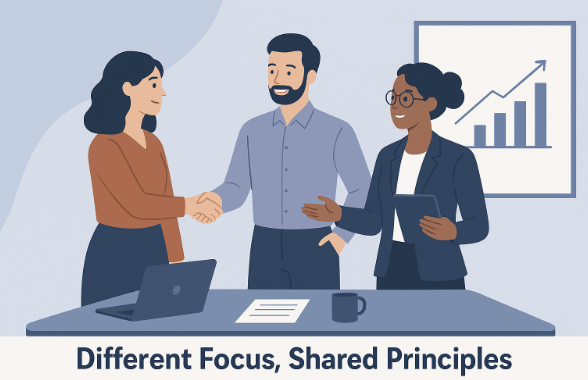
Different Focus, Shared Principles

Product Manager, Product Owner, Scrum Master… Different Focus, Shared Principles

Too often, these roles get lumped together or blurred. But each has a distinct focus:
  • Product Manager → looks outward. Defines vision, strategy, and long-term value in the market.
  • Product Owner → looks inward. Breaks vision into actionable backlog items so the team can deliver step by step.
  • Scrum Master → looks across. Enables the team’s health, learning, and flow so they can sustain delivery.
Different lenses. Different accountabilities.
But here’s the opinionated take -> the best in these roles practice the same principles:
    Leading without authority
    Creating alignment instead of silos
    Holding the “glue” of the system together
    Staying emotionally aware of people and outcomes
One role secures purpose and value.
One secures clarity and delivery.
One secures collaboration and adaptability.

⚖️ Together, they show us that agility isn’t about job titles.

It’s about shared principles, applied through different perspectives.

💡 Where things get interesting is in the behaviours:

Healthy behaviours → challenge assumptions, surface blind spots, create clarity
Dysfunctional behaviours → protect turf, block collaboration, focus on roles over outcomes
The distinction isn’t just PM vs PO vs SM — it’s whether we act in ways that reinforce shared principles, or undermine them.
💬 What behaviours have you seen strengthen (or weaken) the collaboration between these roles?
Readmore in our LinkedIn Group: https://www.linkedin.com/groups/2002329/
Follow AgileMalta on Facebook or LinkedIn
AgileMalta-System-Ripple-Effects

Systems Thinking – The Missing Piece in Agile?

Systems Thinking – The Missing Piece in Agile?

  • Agile helps teams adapt.
  • Systems Thinking helps teams understand.
Put together, they help us see the big picture. How are decisions made today, which affect people, teams, customers, and their long-term results.

Where Systems Thinking helps Agile:

  • Look deeper than symptoms
Missed deadlines and delays are not “people problems”.
They often come from hidden causes like:
  • Unclear priorities
– Silos between teams
– Pressure for speed over quality
  • Avoid short-term thinking
Cost-cutting without awareness of impact can hurt delivery:
    • Stop training → less skill tomorrow
    • Remove QA → more defects later
    • Push teams harder → burnout and resignations
    • Remove Scrum Masters → teams lose support and flow
  • Better teamwork, better results

Innovation needs connection, not silos. Teams work better when:

    • They understand the full system
    • They see how their work affects others
    • They learn through safe experiments
Agile helps us change fast.
Systems Thinking helps us change wisely.
Both together build resilient teams.

What do you think?

Have you seen teams solve symptoms instead of real problems?
Share your thoughts below ⬇️
Follow AgileMalta on Facebook or LinkedIn
Rooted-in-resilience-Agile-Malta

Foundation Stones of Agile

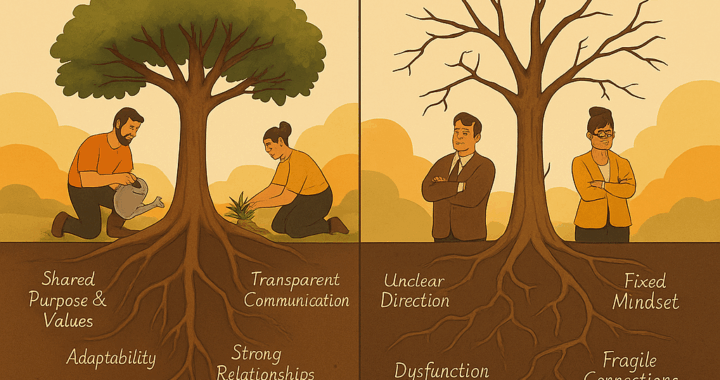
Agile isn’t just a toolkit. It’s a mindset dircting our decisions. And like any mindset, it needs solid foundations.

At Agile Malta, we see 5 cultural pillars that help teams stay adaptable and resilient:
Shared purpose & values
Adaptability
Transparent communication
Strong relationships
Continuous learning

🌀 These aren’t “nice-to-haves.” They’re what make agility sustainable.

💬 Which of these do you feel strongest in your team?
Or which one are you still building up?
Even a one-word comment says a lot 👇

Follow AgileMalta on Facebook or LinkedIn
But that kind of resilience doesn’t happen by chance. It grows out of the culture we create, the way we lead, and how we work together.

Cultures That Support Resilience

In today’s fast-changing world, resilience isn’t just about surviving disruption.
It’s about adapting, recovering, and coming out stronger.
But that kind of resilience doesn’t happen by chance.
It grows out of the culture we create, the way we lead, and how we work together.
At Agile Malta, we see resilient organisations sharing a few traits:
✅ Shared purpose that guides tough calls
✅ Empowered teams that learn and adapt
✅ Transparent communication that builds trust
✅ Strong relationships across teams and partners
🌀 It’s not about being perfect.
It’s about choosing a culture that values long-term performance and people.
💬 How do you see resilience in your team?
Have culture, feedback loops, or collaboration helped you bounce back from challenges?
We’d love to hear your thoughts.
Follow AgileMalta on Facebook or LinkedIn
Agile-Malta-Scrum-speed-rave

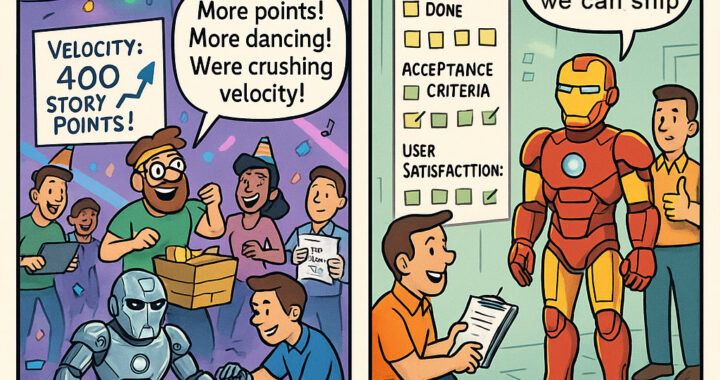
Scrum Speed Rave Party!

Scrum for Speed? 🚨 You’ve Got It All Wrong! 🚨

Ever heard “We’re doing Scrum to go faster!”?
That’s a huge misconception. Scrum isn’t a magical productivity pill to supercharge your team.
Think about it: just going faster can lead to major screw-ups.
It’s like speeding down a road you’ve never been on. You’re more likely to crash!
We’re seeing the same thing with AI, it’s fast, but often the output is completely wrong.
That’s “cargo cult” Scrum: just doing the ceremonies (stand-ups, sprints, etc.) without understanding why.
What Scrum actually gives you:
✅ A way to spot problems early
✅ Fast feedback so you can course-correct
✅ Better focus and teamwork
✅ Delivery of the right things
Here’s a quick story: A sports coach once told me, “Before you run, you learn to walk.” It’s the same with Agile.
I had to slow down in my own gait therapy to learn how to walk properly. The result? I actually got to my destination faster.
The real goal isn’t just speed. It’s about being smart and adaptable. The next time you feel the pressure to “go faster,” ask yourself: “Faster than what?”
Maybe the answer isn’t a faster team, but a smoother system.
Follow AgileMalta on Facebook or LinkedIn

Ethical Thinking in Agile and Systems Work

🧭 Ethical Thinking in Agile Work

In Agile, ethics isn’t about rules – it’s about choices.
👉 Who benefits from this decision?
👉 Who might be left behind?
👉 Are we acting with purpose, or just copying someone else’s system?
Servant leadership means leading with clarity and empathy, helping others understand the why, not just the how.
Agility isn’t only about speed. It’s about quality and sustainability:
    ⚖️ Balancing cycle time & throughput with trust, well-being, and team happiness.
    💡 The real question: Are we measuring what truly matters, for people and the system?
💬 What do you think?
Have you seen times where copying a system failed, or where focusing on the why made all the difference?
Follow AgileMalta on Facebook or LinkedIn